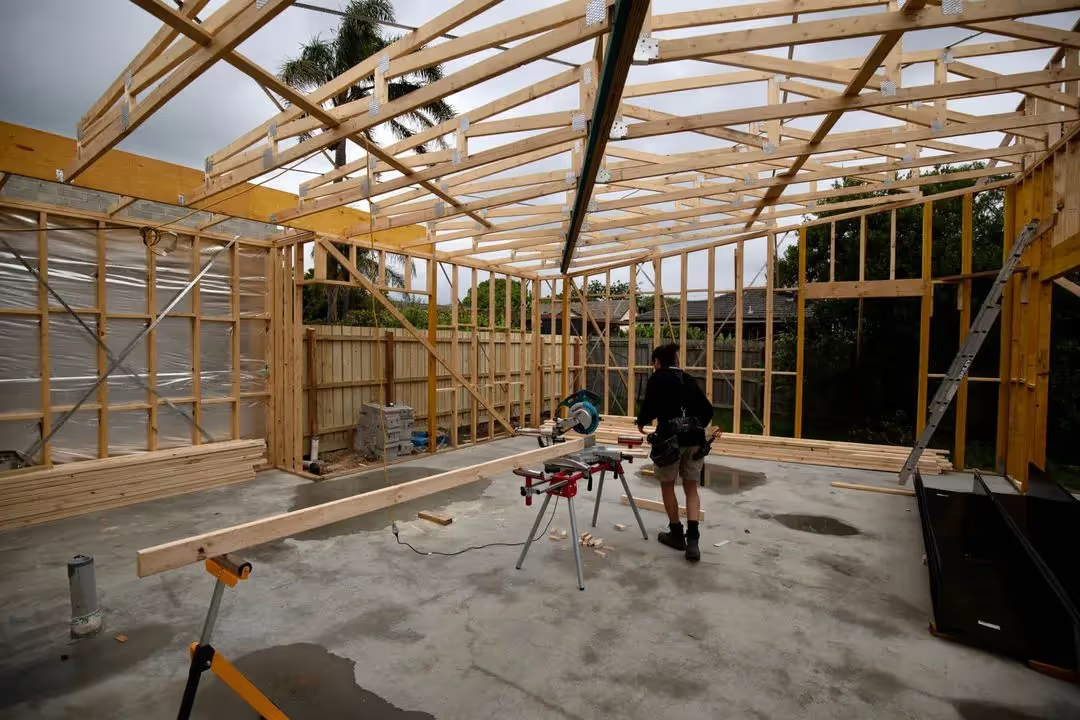
Why an Induction Checklist Matters
A construction site induction checklist gives builders a consistent way to brief workers, contractors, and visitors before work starts. It helps ensure critical safety information is not missed, especially on busy projects with multiple trades and changing risks. [2][4]
Core Checklist Items
Most Australian construction induction checklists should include worker identity, role, white card confirmation, site rules, emergency procedures, key hazards, required PPE, amenities and access points, incident reporting process, and acknowledgment that the person understands instructions. [2][4]
Victoria and Australia Compliance Context
The exact regulatory wording differs by jurisdiction, but the same practical duty applies across Australia: builders and PCBUs must provide workers with relevant health and safety information, instruction, and training. In Victoria, WorkSafe guidance for construction reinforces that site risks must be managed and communicated clearly. [1][3]
Record Keeping and Registers
Your induction checklist should feed directly into a site induction register. At minimum, keep date, worker details, induction version, and acknowledgment record. If a regulator or principal contractor asks for evidence, fast access to complete records is essential. If you want a practical implementation, see the BuilderShield digital site induction forms workflow.
Practical Rollout on Site
Use a short, repeatable process: worker scans a QR code, completes induction fields, acknowledges key rules, and submits before beginning work. Digital tools such as BuilderShield can convert this process into structured records that are easier to retrieve and review. You can also pair this with QR-enabled site signs so workers can start induction at the gate.